

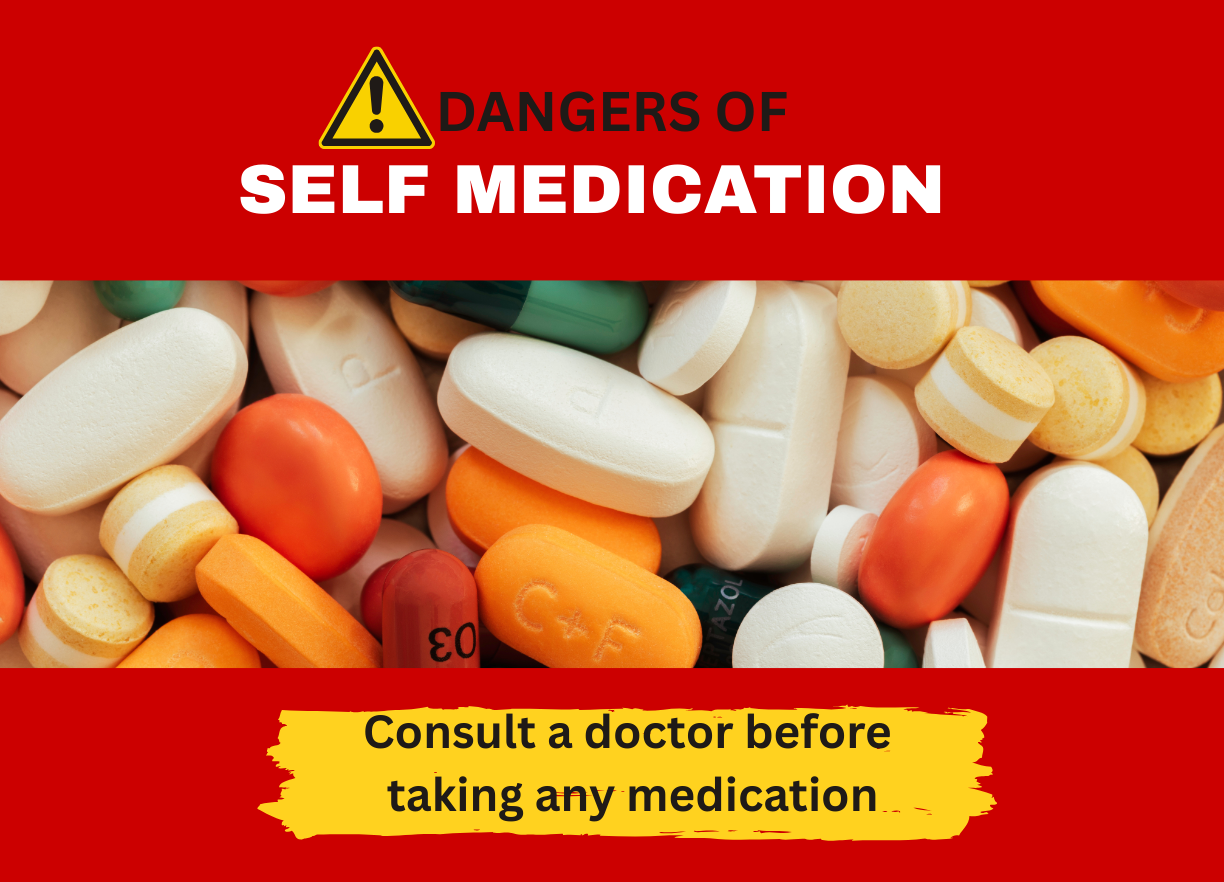
DO NOT TAKE CHANCES- SELF-MEDICATION CAN HARM
Self-medication is the practice of using drugs, herbs, or home remedies to treat self-diagnosed illnesses without consulting a qualified healthcare professional. Self-medication isn’t self-care. While it may seem convenient, cheap, or time-saving, self-medication carries serious health risks that can lead to complications, long-term damage, or even death.
1. Misdiagnosis of the Illness
Many diseases share similar symptoms. For example, fever could be caused by malaria, typhoid, viral infection, or something more serious. Treating the wrong illness delays proper care and may worsen the actual condition.
Without proper laboratory tests and medical evaluation, it is easy to mistake a minor symptom for a simple illness when it could be a serious underlying disease.
2.Drug Resistance
One of the biggest global concerns today is antimicrobial resistance. When people misuse antibiotics by taking the wrong type, wrong dose, or stopping halfway, bacteria become resistant.
Antibiotic resistance is making common infections harder to treat. In countries like Nigeria, where antibiotics are often purchased without a prescription, this risk is even higher.
Drug resistance can make future infections more difficult and expensive to treat.
3. Incorrect Dosage
Taking too much medication can cause toxicity, while taking too little may not treat the illness effectively.
Overdosing on painkillers can damage the liver or kidneys.
Taking excessive anti-malarial drugs can cause serious side effects.
Underdosing antibiotics promotes resistance.
Without medical guidance, dosage mistakes are common.
4. Dangerous Drug Interactions
Some medications should not be taken together. Mixing drugs without professional advice can cause harmful reactions.
For example:
Combining certain painkillers can cause stomach bleeding.
Mixing herbal remedies with prescription drugs may reduce effectiveness or increase toxicity.
Some medications interact with alcohol and can be life-threatening.
Only a healthcare professional can properly evaluate safe combinations.
5. Masking Serious Conditions
Self-medication may temporarily relieve symptoms while hiding a more serious disease.
For example:
Repeatedly treating headaches with painkillers may mask high blood pressure.
Frequent use of antacids could hide ulcers or stomach cancer.
Treating recurring fever without testing may delay diagnosis of chronic infections.
Early diagnosis often saves lives.
6. Allergic Reactions
Some individuals are allergic to specific medications. Without prior medical assessment, taking a new drug can cause:
Skin rashes
Swelling of the face or throat
Breathing difficulty
Severe reactions (anaphylaxis)
In extreme cases, allergic reactions can be fatal if not treated immediately.
7. Dependency and Abuse
Frequent self-use of certain drugs especially painkillers, sedatives, and cough syrups can lead to dependency or addiction.
This can result in:
Increased tolerance (needing higher doses)
Withdrawal symptoms
Mental health complications
8. Financial Burden
Although self-medication seems cheaper initially, complications from wrong treatment often lead to hospitalization and higher medical expenses in the long run.
9. Special Risk for Vulnerable Groups
Self-medication is particularly dangerous for:
1)Pregnant women
2)Children
3)Elderly individuals
4)People with chronic illnesses
Improper medication in these groups can cause severe complications.
Why People Self-Medicate
Common reasons include:
<Easy access to drugs without a prescription
<Previous experience with similar symptoms
<Financial constraints
<Long hospital waiting times
<Advice from friends or family
However, convenience should never replace proper medical consultation.
Self-medication may appear harmless, but it can lead to misdiagnosis, drug resistance, organ damage, addiction, and even death. Seeking professional medical advice ensures accurate diagnosis, correct dosage, and safe treatment.
Your health is too valuable to gamble with.